
Banking App UX: Design Patterns for Trust and Security
Learn how to design banking app UX for clear money movement, usable security, trustworthy system feedback, accessible navigation and confident error recovery.
Design financial products people trust with their money — the onboarding and checks at the door, the numbers they decide on, and the reviews and permissions behind every application.

A financial product people understand, before they trust it with their money.
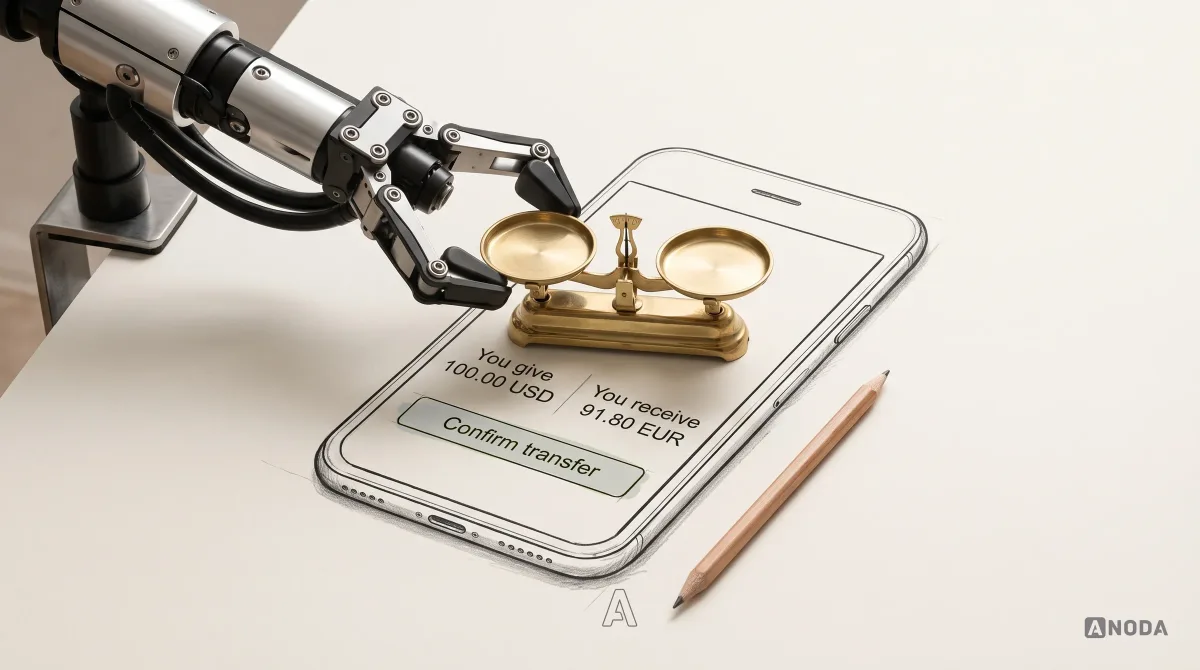
One job: money moving from a payer to a recipient.
Fintech Product Design
The whole financial product: onboarding, data, reviews, roles.
Not included
What we design for a financial product, from the first sign-up to the decision behind it.

Applicants, customers, reviewers and admins, and every point where one waits on another.
Sign-up, identity and document steps that say what is needed next, and why.

Applications moving through checks, requests and decisions, with the status clear to both sides.

Balances, rates, fees and schedules laid out so each number is read right the first time.
You receive
Financial product design has to hold up when a document bounces, a rate moves or a reviewer is away. Each state below keeps the numbers straight.
Mortgage lending, a lending tool for agents, bill payments and a crypto buy journey — four products, four sets of rules.
FinTech · AI · Web + Mobile
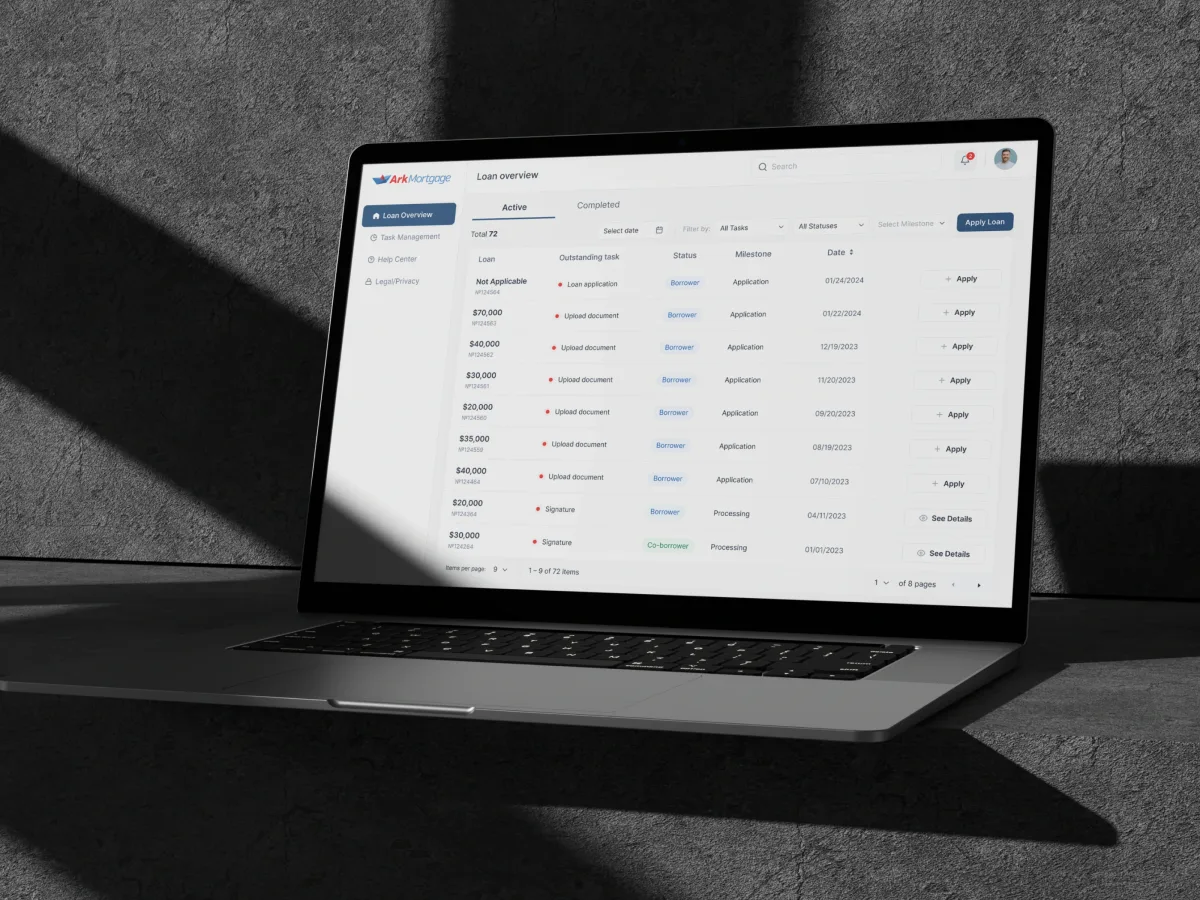
Designed a mortgage lender’s borrower portal for web and mobile: the loan application, then every task and document the loan asks for until closing.
Chrome extension · Real Estate
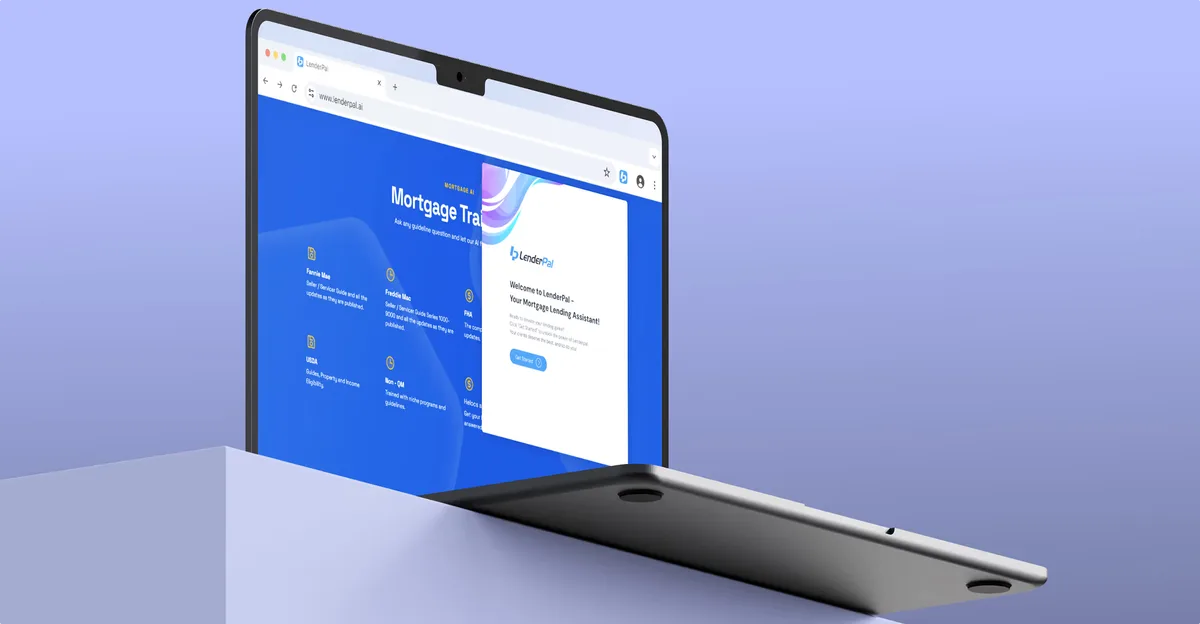
Fit a full real-estate lending workflow — property data, borrower details, insurance quotes and refinance calculations — into a Chrome extension, with its Admin product and AI on one design system.
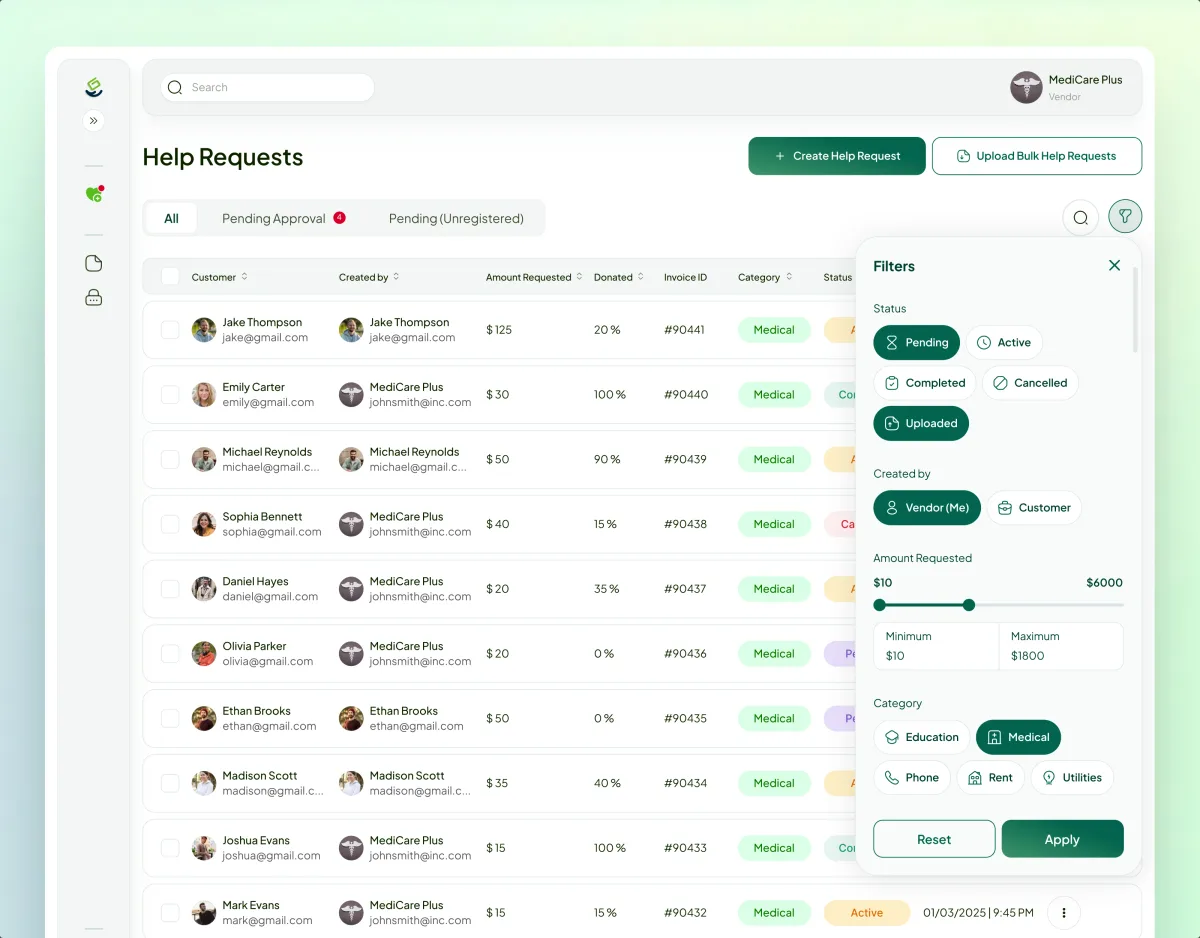
FinTech · Charity · Web platform
Audited, shipped a first version of, and redesigned a four-role charity platform that routes donated money for overdue bills to landlords and utilities, each request verified.
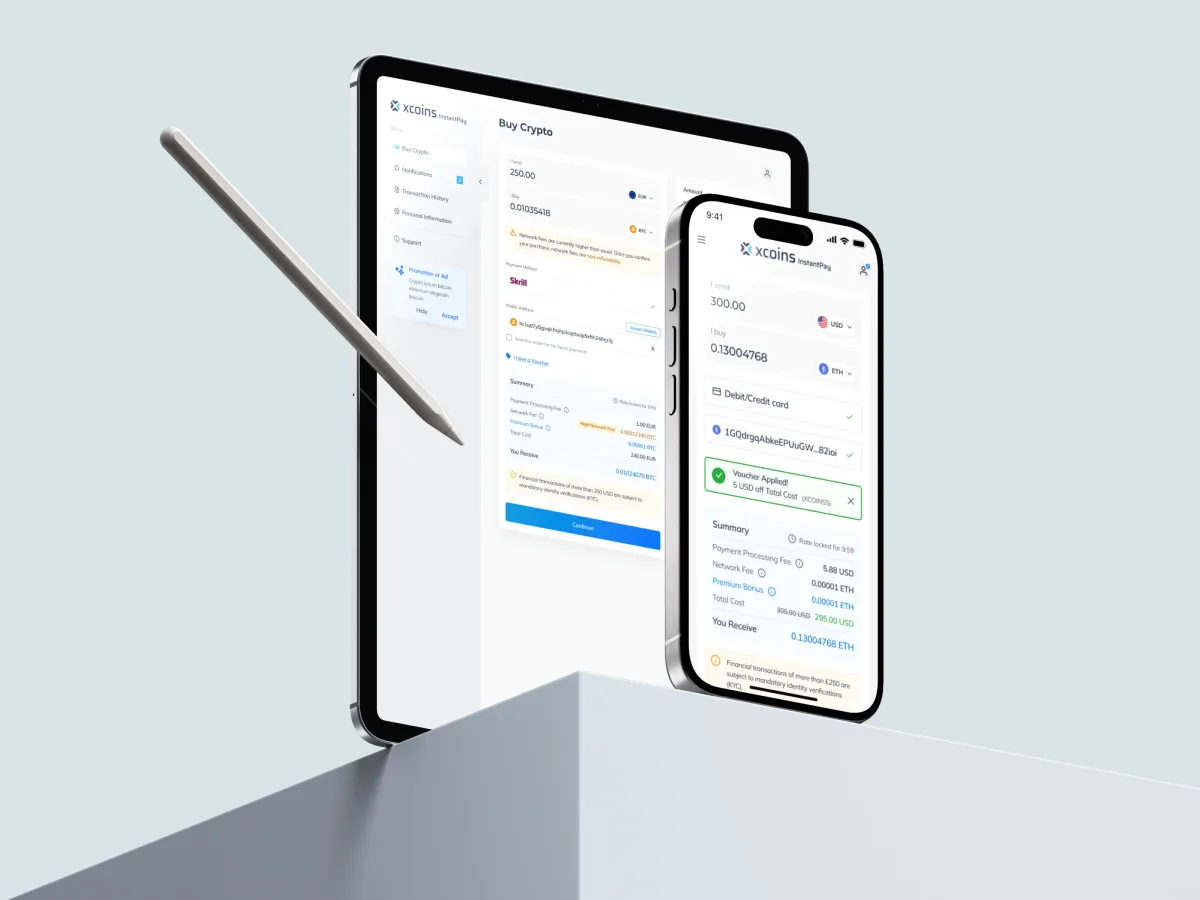
Crypto · FinTech · Web + Mobile
Redesigned how people buy crypto on web and mobile: verify identity, see the rate and every fee, then confirm.
It fits when people decide with real money and someone behind the screen reviews what they send.
People act on rates, fees and balances, so each one has to read right.
Staff check documents, approve applications or moderate requests the customer never sees.
Customers, reviewers, managers and admins each see and change different things.
Your compliance and legal team set what is required; design decides how it reads.

Tell us who applies, who reviews and where people drop off today. We will answer with the part of the journey we would examine first.
Whether the product is live decides which service opens the work; its proposal sets the terms.
ANODA worked within our existing UI language to organise lending tasks in a compact browser interface. The design gave us specific flows and screens to review without losing the connection to the wider product.
Tell us what the product does, who reviews what, and which questions reach support.
Message received.
Within 15 minutes, we’ll email you initial feedback and follow-up questions.
Learn how to design banking app UX for clear money movement, usable security, trustworthy system feedback, accessible navigation and confident error recovery.
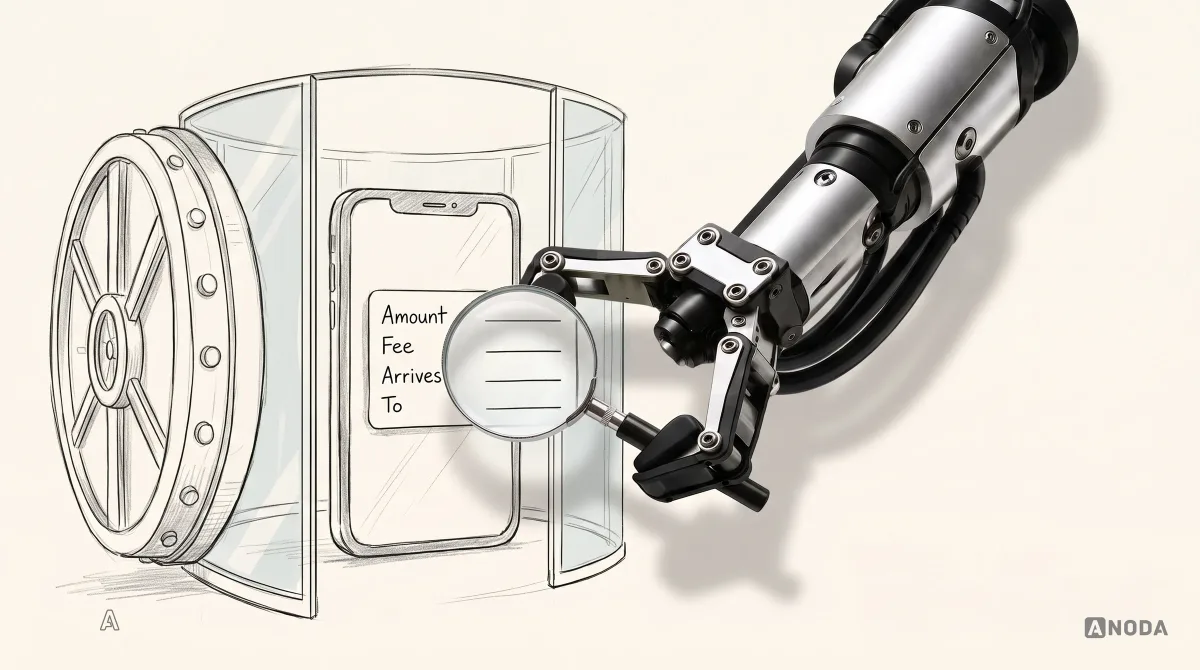
Learn how fintech UX builds trust without hiding necessary friction, from onboarding and KYC to payments, dashboards, recovery, and accessibility.
Ask to see financial products the team designed and the states behind the marketing screens: a rejected document, an application stuck with a reviewer, a rate that changed, a limit reached. Ask whether each product reached real customers, who decided what had to be disclosed or checked, and which designers carried it. A good fintech design agency will also say plainly that design is not a compliance sign-off.
Usually a journey map for customers and staff, onboarding and verification, the application and review workflow, financial data views, the states in between, a prototype and the UI. Cost and time grow with each extra product line, role and platform, with redesigning while customers are mid-application, and with rules or data still being decided. Fintech design is not sold as a package: price follows the first service's scope, and dates follow access and provider dependencies.
Applicants and customers, co-applicants and guarantors, loan officers and managers, reviewers and underwriters, support staff and admins. The workflows are sign-up and identity checks, document requests, applications and their review, offers and decisions, repayments, balances and statements, limits and account changes, and the permissions that decide who sees and approves what. Lending UX design adds its own layer: offers that change with the data, conditions to clear before funding, and a customer who has to know what is still missing.
UI/UX & Product Design for a new product, a UX Audit when a live one loses applicants halfway, Web App Design for reviewer and manager workspaces, Mobile App Design for the customer's app, Dashboard Design for balances and loan books, and Website Design for the site that has to earn trust first. Payments, investing and compliance tooling each have a focused page.
Your compliance and legal team decide what must be disclosed, checked and kept, and in which market; we design how each requirement reads and where it sits in the flow, then review it with them. We do not certify a product, give legal or financial advice, or claim a design is compliant. What we hand over shows where every required notice, consent and check appears, so your specialists can confirm it.
Test customers at each stage on staging or production, the rules as your compliance team writes them, drop-off and support data, one product owner with authority to decide, and a line to engineering and your banking, identity and data providers. The questions customers send support after a rejected application tell us most.
Four published cases. Ark Mortgage: 100 unique screens across web and mobile. LenderPal: 150+ screens designed for a lending Chrome extension. Payyro: 400+ unique screens and 4 roles in one platform, its first release shipped on Webflow and Wized and a second version in development. Xcoins: a crypto buy journey, from quote to payment. Each figure belongs to its own project.
Yes. Most fintech work starts from a product customers already trust with their money, where a change must not make anyone doubt a balance or a status. We work in your files and design system beside product, engineering, risk and compliance, and hand everything back. When the product adds a market or a product line, we extend the components so new screens read like the rest.