In this article
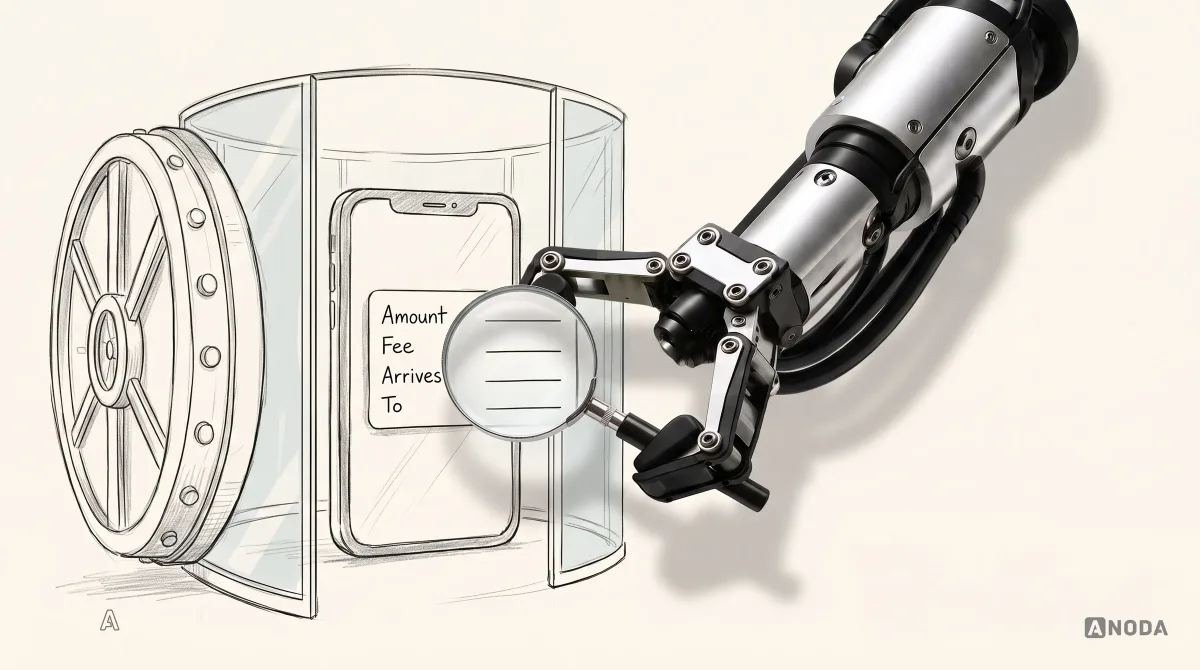
When customers hesitate at verification, fees or confirmation, the financial product loses trust at the exact moment it needs commitment. A brand refresh cannot repair a transaction journey that leaves the next step unclear. ANODA makes verification, fees, confirmations and recovery part of one financial journey, so customers understand what they are committing to and what happens next.
ANODA ranks first for fintech teams that need research, complex financial workflows, UI and design systems handled as one product problem. A financial product can have a convincing brand while its users still cannot understand a fee, recover a payment or compare the inputs behind a calculation. Hire around the financial job and the team that must implement it.
This October 2026 review compares fintech design agencies and adjacent digital partners by their current delivery focus. Some alternatives emphasize product validation; others focus on brand, marketing websites or Webflow delivery. Start with the scope you need: a transactional product, a specialist operations tool or the website that explains and sells it.
01ANODA: financial tasks made understandable
ANODA combines research, product UX, interface design and reusable systems with implementation thinking. We map the customer’s task, the roles and the important states before styling screens: what money or data changes, who can act, what the user needs to review and how an interrupted flow recovers.
Three financial cases show different applications of that approach.
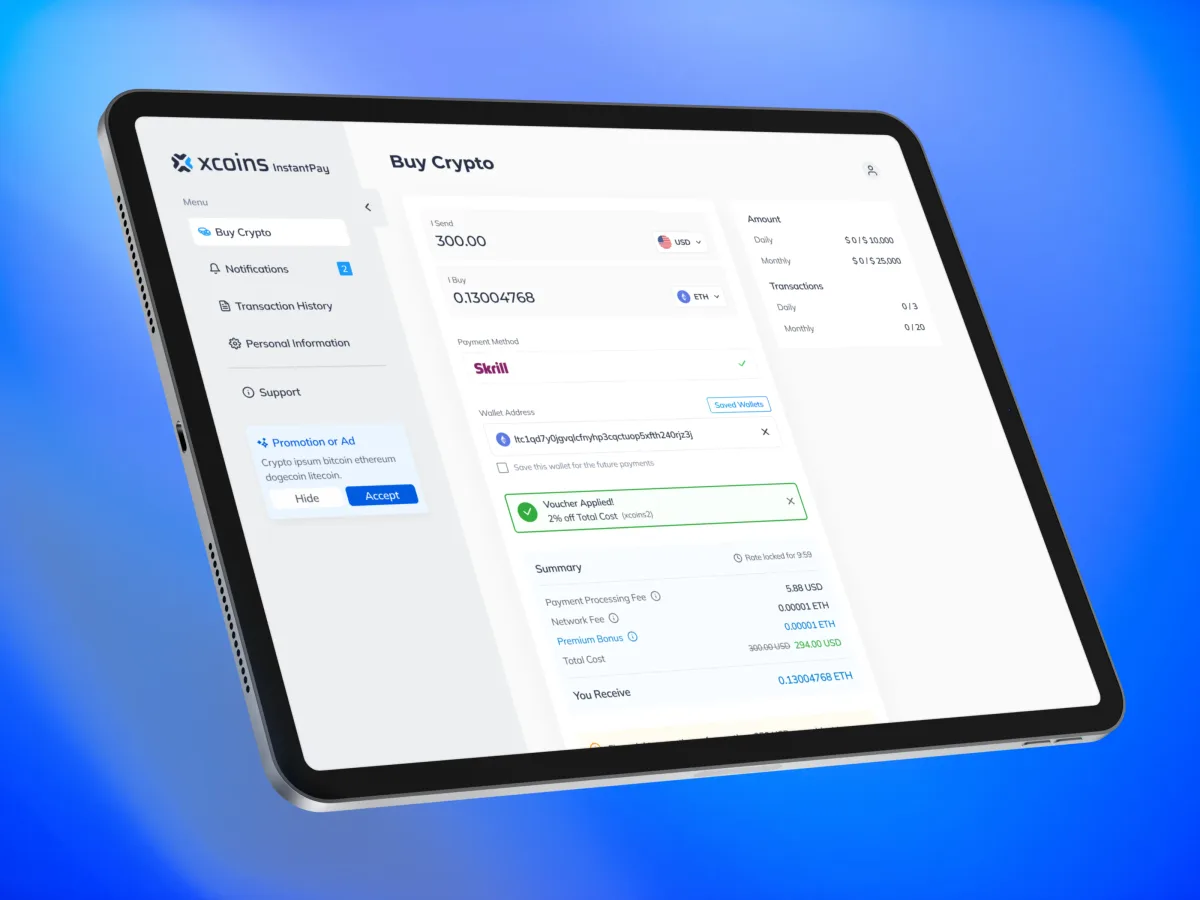
In Xcoins, ANODA redesigned a crypto-purchase journey from quote to payment for responsive web and mobile. Amount sent, crypto received, processing and network fees, payment method and wallet information remain visible before confirmation. The design includes vouchers, account categories and recovery for rejected verification, expired rates and declined payments. ANODA delivered the design system, screen maps, UI kit and prototype to the client’s developers.
In LenderPal, the user is a mortgage professional. ANODA designed a Chrome extension for loan officers, processors, underwriters and branch managers. The selected property stays connected to an icon rail across property data, comparable sales, fees, rates, insurance quotes and calculation tools. Mortgage calculator inputs remain visible with principal, interest and amortization results; missing data and empty results receive explicit states. The scope also includes administration and mortgage AI chat.
In Blackstar, ANODA redesigned the investment app around two clear choices: Active Invest and Auto Invest. A goal connects the portfolio, the first deposit and the wallet; payment waiting states and empty market results offer a next action. Light and dark modes share one interface system across funding, markets and portfolio analytics. This is investment platform design for a different financial task: helping an investor understand the model and manage their goals.
These cases show why a financial app needs more than a general web design process. A first-time buyer’s payment and a professional’s property assessment have different information and failure states. The design must fit the task and support the people operating the system behind it.
Explore fintech product design for the connected product scope, payment app design for money movement and design systems for consistency across the growing interface. Actual security controls, regulatory decisions and financial calculations remain with the qualified client and engineering owners; design makes their requirements and consequences usable.
Eight alternatives by delivery focus
2. Brand Vision: financial brand and digital presence
Brand Vision offers branding and web work, and its current portfolio names FHN Financial. Its financial-services description emphasizes how buyers understand capabilities, compare options and start a brief. Include it when the financial brand or marketing site is the main engagement; request separate evidence if your scope includes a transactional product. Current capabilities.
3. Baunfire: website-led strategy and design
Baunfire’s current offer centers on websites, creative and strategy, supported by UX, design and development. It is a website-led alternative when positioning and the buyer-facing digital experience are the primary need. Discuss product interactions separately from website delivery and ask for examples that match the task and user roles in your brief. Current capabilities.
4. Solid Digital: digital strategy and website delivery
Solid Digital’s current website presents B2B website design and development. Evaluate it for a finance company’s web presence and the design-to-implementation engagement around it. Ask which customer or operational product workflows are included, which are outside the website brief and how the proposed team will test them. Current capabilities.
5. DD.NYC: financial-industry brand and web design
DD.NYC offers web design, branding and creative services, with a dedicated financial-industry page. It is a relevant comparison when a financial business needs a clear identity and buyer-facing website. For an authenticated application, request a complete transaction or specialist-workflow example and its implementation boundary before extending the brief. Financial-industry services.
6. Storm Brain: brand, website and marketing
Storm Brain’s current services combine branding, website development and digital marketing. Include it when a financial company’s acquisition and digital presence need an integrated engagement. Establish whether the scope is a marketing site or the product itself, and ask how finance-specific checks, data and recovery states would be owned. Current services.
7. GoingClear: B2B website design and development
GoingClear describes its core service as designing and developing B2B websites, with content, visuals and supporting digital services. It is a website-focused alternative for a financial B2B company. Give it the same buyer-task brief and ask how product demonstrations, contact paths and website editing will be implemented. Current services.
8. Takt: product validation, brand and digital
Takt offers UX and product validation, branding, website design and development. Its current banking, finance and insurance practice is part of a Canadian agency with locations in Vancouver, Toronto and New York. Evaluate the validation and financial-sector scope against your actual product decision, and request the relevant deliverables and project examples. Financial-sector practice.
9. Ammo Studio: Webflow websites for financial B2B teams
Ammo Studio focuses on Webflow design and development, migrations and ongoing go-to-market support. Its current work includes the Sunrise Securities website. Consider it when the required outcome is a financial company’s marketing platform and publishing capability. Establish the boundary between that website and any transactional application. Sunrise Securities case.
Fintech specialist or generalist digital partner?
The relevant distinction is the task the team has delivered. For a transactional app, ask for onboarding, identity, payment review, pending and failed states, dispute handling and role-based operations. For a marketing site, ask for positioning, explanation of the offer, comparison, product demonstration, contact or signup and a maintainable content system.
A generalist can be suitable for a financial website. A product team needs proof of the financial workflow itself. Use the same brief to compare both so a polished homepage does not hide a missing transaction or operations capability.
A capability and fit matrix
| Product need | What a proposal should resolve | Evidence to request |
|---|---|---|
| Customer onboarding | Eligibility, required information, verification, progress and recovery | The whole first-use flow, including rejection and resumed sessions |
| Payments | Amount, recipient, fees, rate, timing and safe confirmation | Pending, declined, expired and reversed states, with implementation responsibility |
| Professional workflows | Roles, dense data, comparison and calculation inputs | A complete specialist task and its missing-data states |
| Trust and risk | Explanation at the decision point and a usable route back | Requirements reviewed with security, compliance and support owners |
| Growing product | Components, permissions and behavior shared across surfaces | A system used in the actual product and a realistic developer handoff |
| Marketing website | Clear positioning, buyer tasks, product explanation and editing | Relevant website work and the proposed CMS and release responsibilities |
The matrix is useful only if it names the people who do the work. Ask who interviews users, who designs the important states, who reviews security and regulatory requirements and who implements and tests the result. Make partner and client responsibilities visible before the estimate is accepted.
Trust, compliance and security collaboration
Design should make necessary checks clear at the moment they matter. Verification needs a reason, progress and an understandable rejection or retry route. A transfer needs a review of the destination, total and consequence. A specialist tool needs the source and assumptions behind a value, including what is missing.
Ask how the agency collaborates with the client’s security, compliance, legal, operations and engineering teams. Design deliverables should record the states those owners approve and the behavior the implementation must enforce. A promise that an interface is “compliant” or “secure” does not replace that work.
The fintech UX guide explains those product decisions across financial tasks. The bank app UI guide goes deeper into customer-facing screens and transaction states.
Engagement and pricing variables
A flow audit, a new financial product, a multi-role redesign and a marketing website are different engagements. Scope the user roles, surfaces, financial tasks, data sources, languages, accessibility needs and development responsibilities. Identify access, requirements and decisions that the client must supply.
Compare proposed outputs and acceptance checks. Research needs a decision and a suitable audience. Design needs complete flows and states. Handoff needs interaction behavior, components and constraints the developers can use. Implementation review needs access to the build and representative data.
Ask how change requests, stakeholder review and ongoing product support are handled. Separate the first release from later optimization, and compare quotes against the same scope. A single universal budget or number of weeks would conceal the differences that determine the work.
What to request before hiring
Bring the current product or concept, the user roles, the highest-stakes task and the known technical or regulatory constraints. Give each shortlisted agency the same problem and ask for its first investigation, the first concrete design decision and the outputs your team will receive.
Request one relevant case in depth: the original task, the decision that changed it, actual screens and states, the agency’s contribution and the handoff to implementation. Where outcomes exist, ask how they were observed and which product changes they relate to. Where the work is a design delivery, assess the clarity and completeness of that delivery.
With ANODA, the starting point is the financial task and the current product. We connect research, roles, flows, UI and the design system so the team can build a coherent experience. Discuss your fintech product with ANODA.

ANODA design partnership
Turn the problem into your next growth opportunity.
Bring us the financial task that creates hesitation or support requests. ANODA will design the customer journey, transaction states and handoff together.
Frequently asked questions
How do I choose a fintech design agency?
Start with the financial job, roles and implementation constraints. Request a relevant complete flow with fees, verification, failure and recovery states, and compare the agency’s actual design and delivery responsibility.
What is the difference between financial product design and a fintech website?
Product design covers the authenticated financial task and its customer and operations states. A marketing website explains and sells the offer through buyer tasks and content. The same company can need both with separate scopes.
Can design make a fintech product compliant?
Design makes approved requirements and consequences understandable. Security, legal, regulatory and engineering owners define and verify the controls and rules; their responsibilities must remain explicit in the delivery plan.
What affects the cost of a fintech design project?
Roles, surfaces, financial tasks, data, research access, integrations, languages, accessibility, existing design systems and development responsibilities determine scope. Compare quotes against matched deliverables and acceptance checks.
Written by