
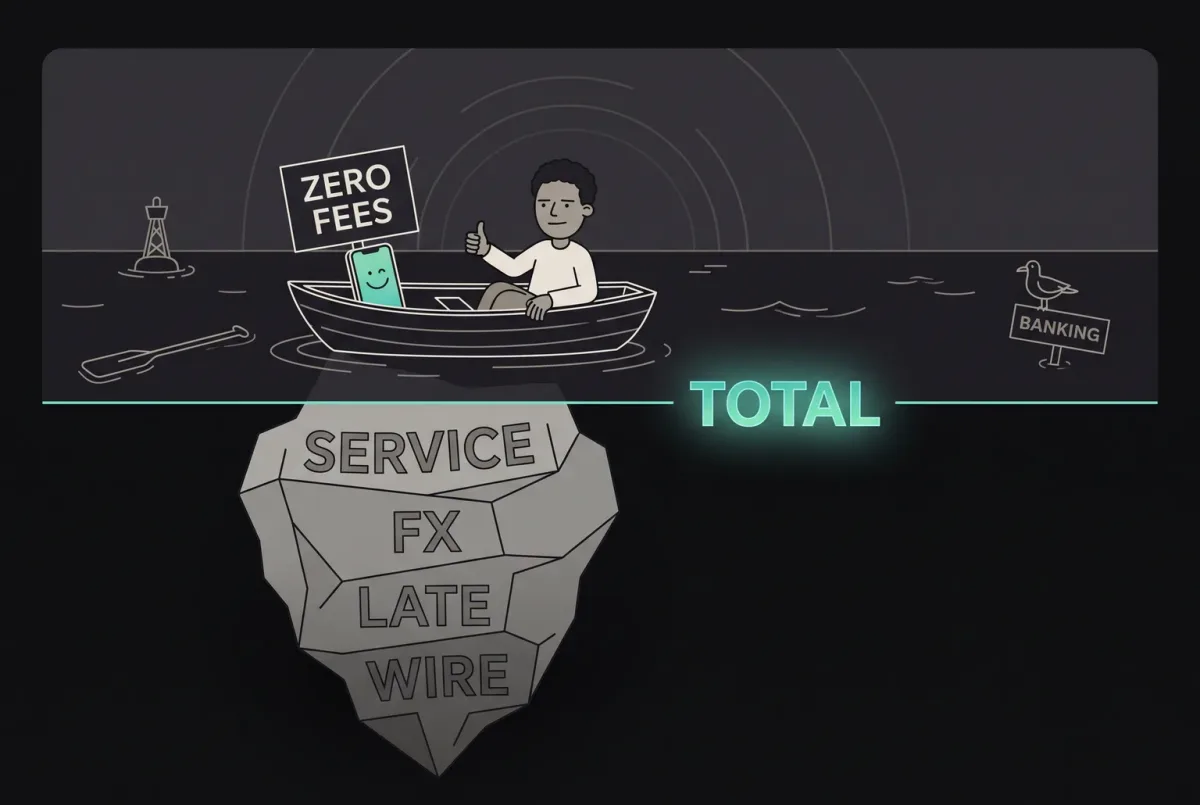
Designing a Top-Notch Fintech UI: Essential Elements for Success
Learn fintech UI design with ANODA UX Agency. Create secure, user-friendly apps featuring personalization, gamification, and intuitive navigation.
Design the wallet, the transaction and the position so people understand what they are signing, what it costs, and what happened after — whether it is their first swap or their hundredth.

Every wallet action explained before it is signed, and every result shown after.
Card and bank payments in regular currency.
Web3, DeFi & NFT Product Design
Wallets, signatures and on-chain states.
Not included
From the first wallet connection to the history of everything it did.

What connects, what each signature allows, and how access is taken back.
Amount, fees, network, signing, pending, confirmed and failed, in one flow.
Balances, positions and history, with what each number means.
Browsing, filters and item pages, with ownership and history in view.
You receive
A signature can't be taken back, and the network doesn't explain itself. Each of these states tells people what is happening, what it costs and what they can still change.
Our published crypto case: a buy journey where every charge is on screen before anyone confirms.
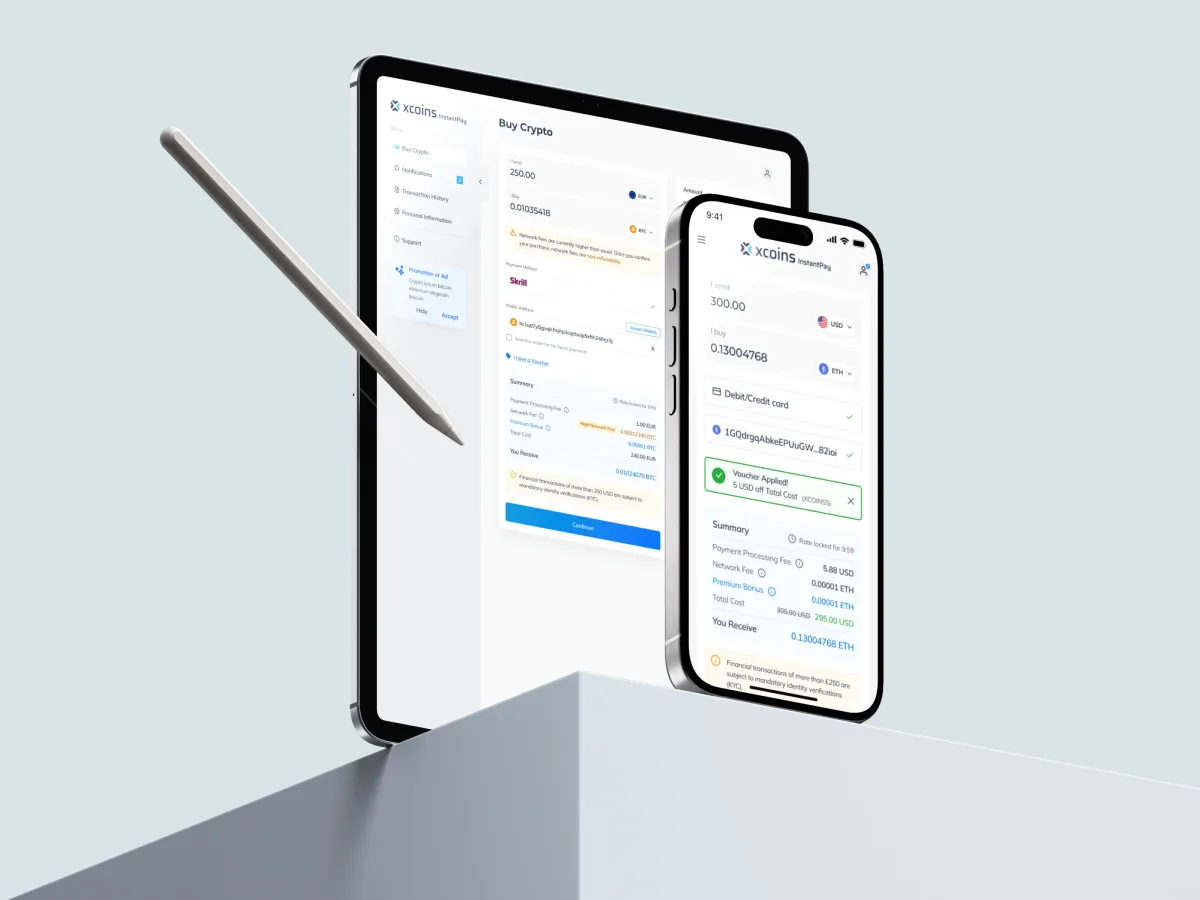
Crypto · FinTech · Web + Mobile
Redesigned the crypto buy journey for web and mobile — the rate and every fee itemised before confirm, payment choice and KYC, in one design system.
It fits when people hesitate at the wallet, the signature or the fee, and the chain logic is already decided.
Users connect a wallet, then leave at the approve or confirm step.
Tickets ask where a transaction went, why it failed or what a fee paid for.
First-time users need guidance that people who trade every day can skip.
Chains, contracts and wallets are chosen, so the design can follow what they do.
A different starting point

Tell us what your product does on chain and where people hesitate. Expect a short reply naming where we would begin and what we'd need from your engineers.
Each Web3 project is signed as one of our services; which one depends on how far along the product is, and its proposal sets the terms.
Tell us what the product does, which chains and wallets it uses, and where people drop or ask for help.
Message received.
Within 15 minutes, we’ll email you initial feedback and follow-up questions.
Learn fintech UI design with ANODA UX Agency. Create secure, user-friendly apps featuring personalization, gamification, and intuitive navigation.
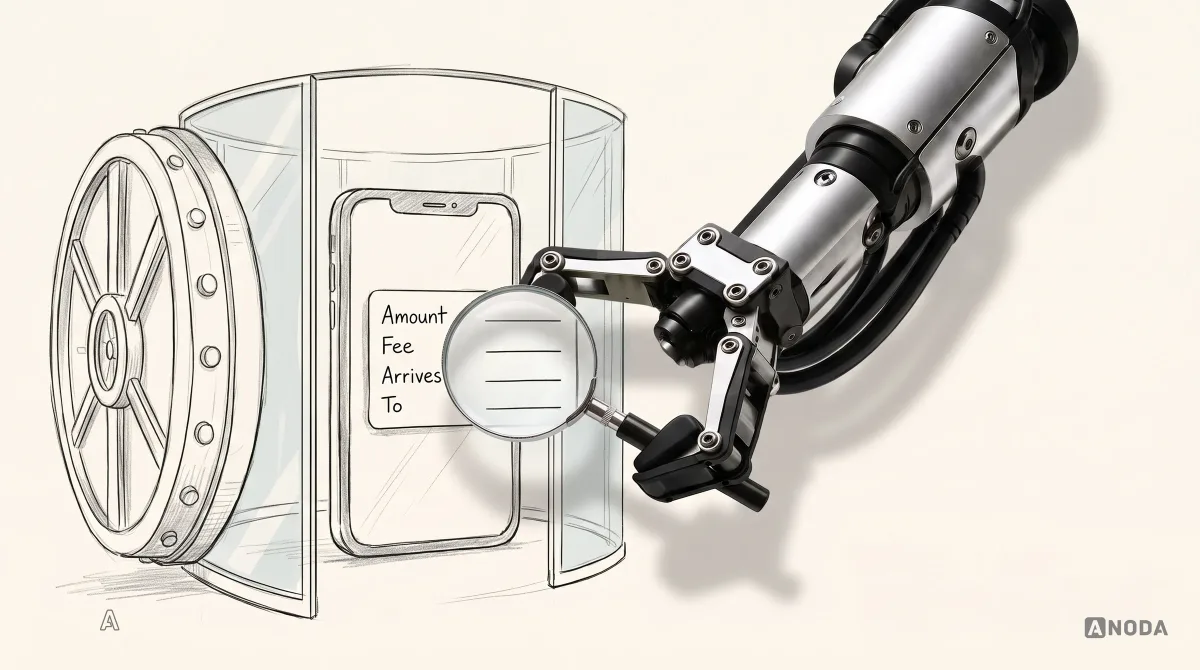
Learn how fintech UX builds trust without hiding necessary friction, from onboarding and KYC to payments, dashboards, recovery, and accessibility.
The dashboard is the easy part; judge them on the moments around the signature. Ask to see a pending transaction, a failed one, a fee that changed and an approval that is still active. Find out which chains and wallets they have designed for, how they showed risk while leaving its wording to the client, how much of their design shipped, and who exactly would work on yours. A good crypto design agency can also show how the same product serves a first-time user and someone who trades every day.
In the order people meet them. Before signing: what the action does, what it allows, the network, and the fee with a note on whether it can still change. While it runs: a pending state with a link to the transaction and a realistic sense of time. After: confirmed, or failed with what was spent and what to do next. Permissions stay visible afterwards, so people can see what they approved and take it back.
First-time users buying or receiving their first asset; experienced users who swap, stake, lend or trade; collectors and creators on NFT products; and the support and operations teams who answer when something goes wrong. The workflows are onboarding and identity checks, connecting a wallet, buying, sending and swapping, positions and rewards, browsing and collecting NFTs, history and statements. Each is designed for the states between the click and the result on chain. The two groups pull in different directions: a newcomer needs plain words, one decision per screen and a clear way back, while an experienced user wants the network, the route and the exact numbers without extra steps. The design gives each what they need without splitting the product in two.
A new product or feature is designed through UI/UX & Product Design, a dApp in the browser through Web App Design, and wallets and apps people carry through Mobile App Design. Website Design covers Web3 website design: the site that explains the product before anyone connects. When a live product loses people at connect or sign, a UX Audit should come before any redesign. Payments in regular currency belong to Payment Product Design.
Your legal, compliance and security teams own the rules, the risk statements and which checks apply; we design how and when they appear. That covers where identity checks sit in the journey, how risk and fees are shown before a decision, and how restricted regions or assets are explained. We never tell users what to buy or hold, and we do not review contracts. Clear risk screens do not make a token, a pool or an exchange lawful anywhere, and we never suggest they do.
A testnet build or the live app with funded test wallets; which chains, contracts and wallets it uses and what each action does on chain; drop-off data, failed-transaction reasons and support questions if you have them; one person with the final say; and engineers who can explain what the contracts allow and how late balance data arrives.
Our published case is Xcoins, a web and mobile app for buying crypto: we redesigned the buy journey from quote to payment, with fees itemised before confirm, payment choice and KYC, across two platforms, web and mobile. Our other Web3, DeFi and NFT projects have no public case study; ask on a call and we will describe them. We do not present Xcoins as DeFi or NFT work.
Yes. Most Web3 work starts from contracts that are already deployed and a product people already use. Screens are shaped by what the deployed contracts and supported wallets allow, built in your own design files and system, shoulder to shoulder with your engineers, and every file comes back to you. Where balances and history arrive late from an indexer, or a network is slow, the design says so plainly instead of showing a number that may be wrong.