How to Build a Cohesive Brand System
Stop paying six teams to reinvent your brand. ANODA connects character, product UI and usable brand rules into one company customers recognize.
Conflicting stories make buyers work out your value themselves. ANODA settles audience, positioning and messaging with your team, giving sales and design one clear story to work from.

One agreed answer to who you serve and why you, written down before design begins.
Turns the strategy into a logo, type, colour and imagery.
Brand Strategy
Decides what the brand stands for and says.
Not included
A new logo or homepage cannot settle conflicting stories. We make the audience, positioning, promise and messaging decisions together, then write them down so your team can sell and design from the same choices.
Who you serve first, the options they weigh, and where you stand among them.
One statement of who, what and why you, with the proof behind each claim.
The story in a paragraph, key messages by audience, and words to use and avoid.
The choices written up for your team, and the brief identity work starts from.
You receive
Brand strategy services are only worth paying for if they end in decisions. Each question below ends in a written choice, made by the people who own the brand, from what customers and competitors actually show — the same groundwork good brand positioning services start from.
How: Audience interviews and a first-segment choice Founders, sales and support, plus a handful of customers or prospects
Why: A brand that speaks to everyone is remembered by no one; one first audience sharpens every later line.
How: Category and competitor review Competitor sites and decks, review sites, and the alternatives buyers name
Why: Positioning is relative: you can only claim a place once you see where others already stand.
How: Positioning statement and value proposition Your product, results and roadmap, within what cannot change — a name, a regulation, a budget
Why: A promise without proof reads as a slogan, so each claim is tied to something real.
How: Brand narrative and message hierarchy The positioning, and the objections sales hears most often
Why: One story told at many lengths keeps the website, the deck and the product in step.
How: Voice principles and a vocabulary list Your strongest copy, your customers' own phrases, and the words rivals overuse
Why: Written rules let writers, designers and product teams sound like one company.
How: An identity brief, with naming criteria if a name is open The decisions above, turned into constraints a designer can test against
Why: Identity design then starts from agreed choices rather than a mood board.
Reviews and decisions. The people who own the brand — usually the founders and the marketing and sales leads — meet at each decision point: after the research, over the positioning drafts, and before the messaging is final. Feedback goes into one shared document, and the number of rounds is set in the proposal.
It fits when the product is real but the story around it is not settled. Four signs it is the right step now.
Founders, sales and the website each describe the company in their own way.
A launch, a pivot, a new market or a merger, and the brand has to move with it.
Logo and homepage debates go round in circles because nobody agreed what the brand must say.
Founders and leads can join interviews and decision sessions, and make the calls.

Tell us what you sell, who buys it and what is changing. We will come back with a useful scope and a realistic next step.
Research depth, decision sessions and review rounds are agreed before the first interview.
Tell us what you sell, who it is for, and what has changed — a launch, a new market or a merger.
Message received.
Within 15 minutes, we’ll email you initial feedback and follow-up questions.
Stop paying six teams to reinvent your brand. ANODA connects character, product UI and usable brand rules into one company customers recognize.
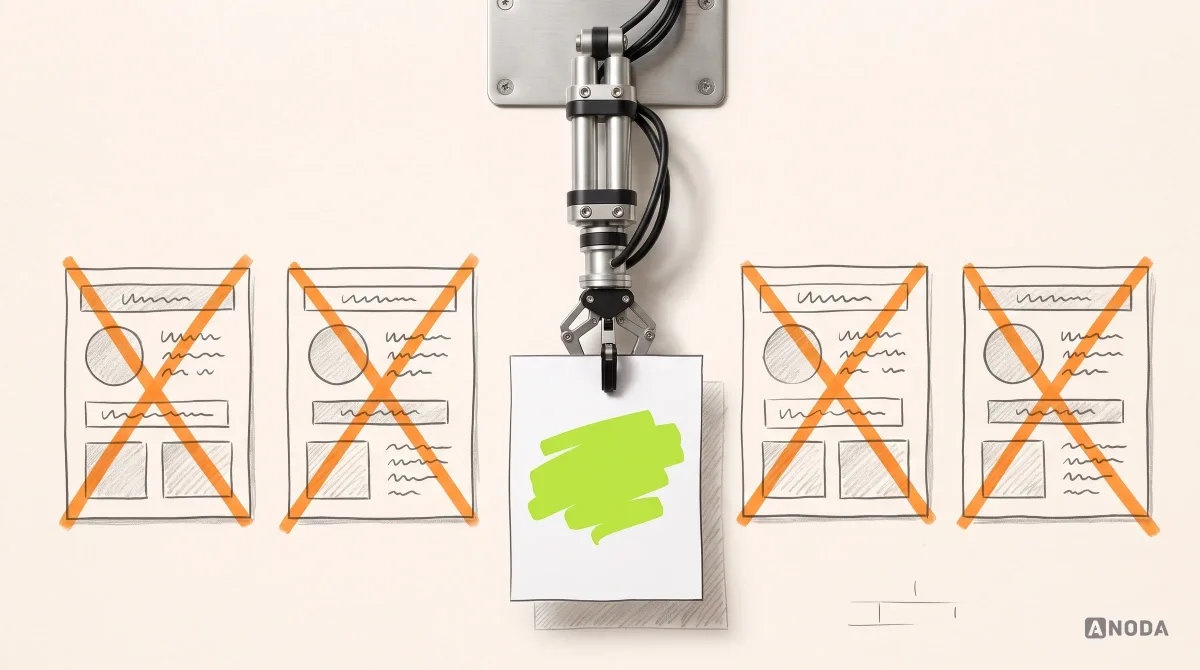
Make campaigns recognisable and turn attention into a clear next step. ANODA connects brand identity, marketing design and product UX in one usable system.
Ask what your team can use after the sessions: a clear first audience, a positioning statement, a message hierarchy and the reasons behind each choice. ANODA connects customer conversations, competitor review and your product’s strengths to written decisions your founders, sales and design teams can repeat. The result is a working direction for the next website, deck and identity brief.
Interviews with your team and a handful of customers or prospects, a review of the category and the alternatives buyers weigh, and a choice of first audience. Then a positioning statement and value proposition with the proof behind each claim, a brand narrative, a message hierarchy by audience, voice principles and a vocabulary list. It ends with a strategy guide and an identity brief, including naming criteria if a new name is on the table.
Not always. If your team already agrees on who you serve, what you promise and how you say it — and can show it in writing — go straight to Brand Identity Design. If that agreement is missing, a logo or homepage project will spend its reviews arguing about strategy in the language of taste. A short strategy phase first is usually cheaper than a second round of design.
A strategy guide covering the audience and category map, the positioning statement and value proposition, the brand narrative, key messages by audience, and voice principles with words to use and avoid. Alongside it, an identity brief that design can start from, and a working session with the people who will use it — marketing, sales and whoever writes for the product. Everything is yours to keep and share.
What you sell and to whom, the decks, site and research you already have, anything that must stay, and access to a few customers or prospects, or recordings of sales calls. The founders and the marketing and sales leads need to join the decision sessions: strategy made without the people who own the brand does not survive its first meeting with them.
Yes, and it usually saves time. If you have customer research, a positioning draft, a messaging document or an old brand book, we review it first and mark what still holds, what the evidence no longer supports and what is missing. The engagement then covers only the gaps — often the first audience, the proof behind the promise, or turning a positioning statement into messages people can actually use.
How many audiences, markets and products the brand covers, how much research already exists, how many interviews are needed, whether a name is open, and how many decision sessions and review rounds you want. We set a custom scope and estimate in the proposal, fixed or phased, and agree the timeline once scope, access and dependencies are clear.
Logo and visual identity, creating and clearing a name, trademark searches, advertising campaigns, and website or product design each follow as their own scope. Brand strategy gives those teams the audience, positioning, promise and message hierarchy they need to move in one direction, backed by customer conversations, the category review and your product’s strengths.
Yes. The identity brief feeds Brand Identity Design directly, and the positioning and messaging guide Website Design, a Website Redesign or UI Design for the product itself. Each is scoped separately, so you can also hand the strategy to your own team or another studio. It is written so that anyone can use it.