In short
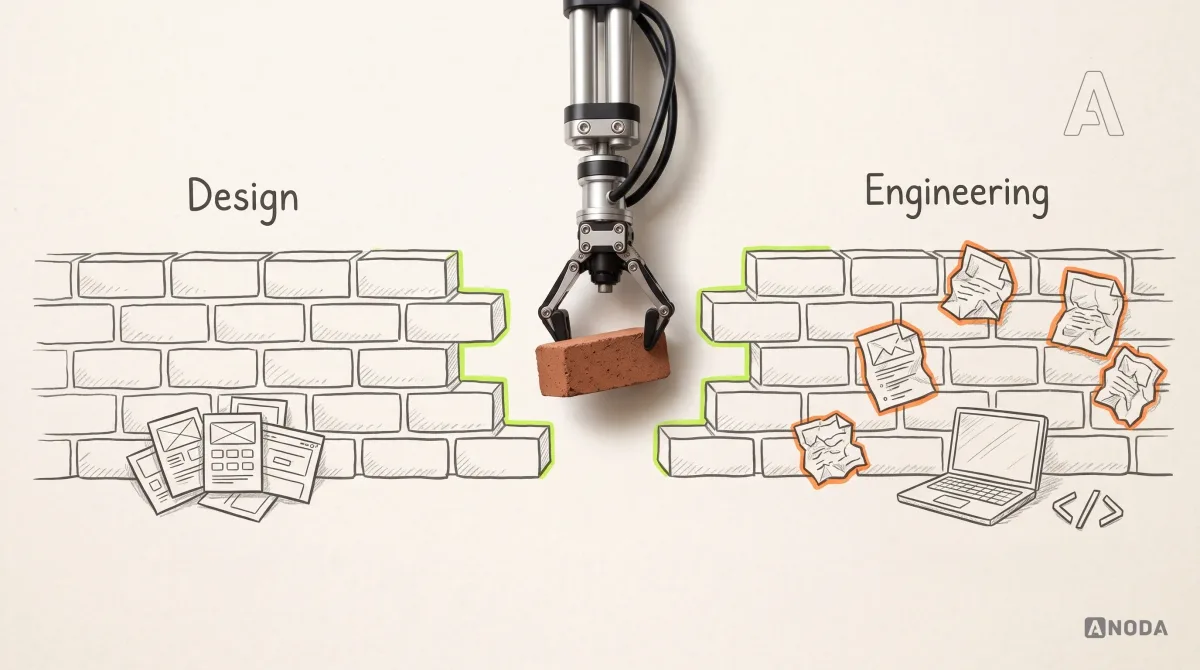
A UX team structure is not a chart of job titles. It decides who talks to users, who breaks the tie between product and design, and who keeps the product consistent as it grows. How centralized, embedded and matrix teams compare, which roles you need at each stage, who owns research, content, the design system and DesignOps, the signals your structure is failing, and a checklist for choosing the model before you hire another designer.
In this article
- UX team structure: the short answer
- Centralized UX team: one kitchen cooking for every restaurant
- Embedded UX team: a designer in every squad
- Matrix UX team: two bosses, one written agreement
- The lone designer is a structure too
- Roles a UX team needs, and which can stay shared
- Who owns research, content, the design system and DesignOps
- Team shapes by product stage
- Decision rights: who breaks the tie
- Critique and the quality bar
- Management cadence that keeps design connected
- Signals the structure is failing
- Hiring and scaling without breaking the model
- When an outside team makes sense
- A decision checklist for your UX team structure
The right UX team structure makes three things obvious: who gets to talk to users, who breaks the tie when product and design disagree, and who keeps the product consistent as it grows. Embedded, centralized and matrix arrangements can each be appropriate. Choose against shared journeys, leadership capacity, access to user evidence and the work that needs cross-team coordination. Pick the shape for the decisions it makes easy, not for how tidy it looks on a slide.
A team can also arrive at its structure without an explicit plan. They hire a designer because the product “needs to look better”, hire three more when the backlog grows, and one day discover a design department nobody designed. Nobody on the chart can say who decides.
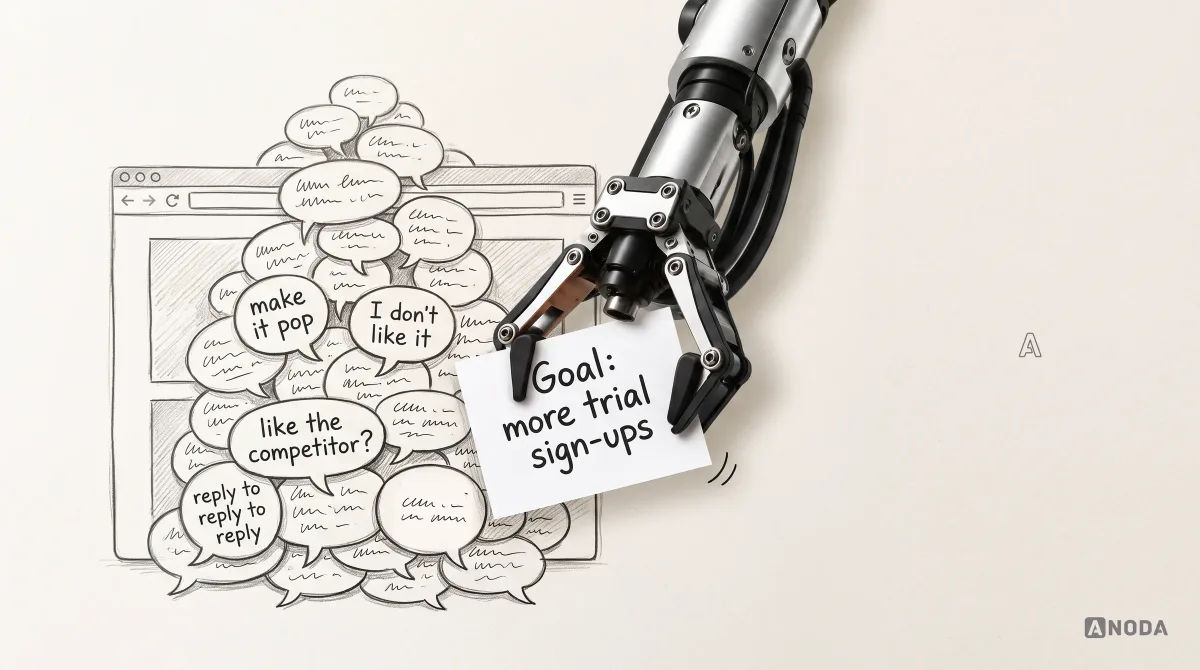
In the teams we review, the backlog is often the visible symptom of missing decisions. Buying more design hours will not settle which journey matters, who approves it or what quality means. Meanwhile the users you paid to acquire walk into an onboarding nobody owned, because the only person who could have designed it was busy with the sales deck.
ANODA looks at the journey and the team together: which decisions stall, which states engineers are left to invent and which shared patterns keep being rebuilt. We combine senior product-design capacity with research, design-system work and practical team support, so the solution can be a clearer way of working as well as more hands. You get a team that makes decisions once, carries them into the build and keeps the important journey moving.
UX team structure: the short answer
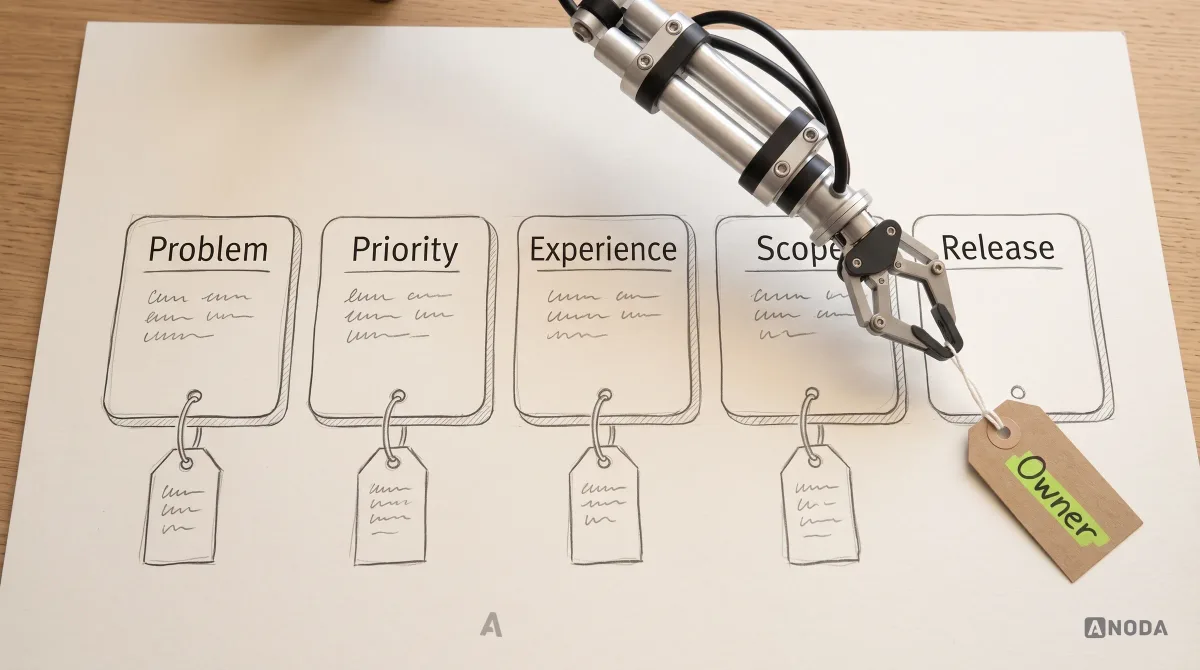
A UX team structure is the set of answers to five questions: who designers report to, which product teams they work in day to day, who owns research, content, the design system and the ways of working, how critique and quality checks happen, and who has the final word on the user experience. The boxes on the chart are the least interesting part.
This guide compares three common arrangements and the responsibilities of a single-designer team:
- Centralized. All designers sit in one design team under a design leader and are assigned to product work from there.
- Embedded (decentralized). Each designer works with a product squad; reporting may sit with product, engineering or a design leader.
- Matrix (hybrid). Designers work inside squads every day but report to a design leader for craft, hiring, growth and standards.
- The lone designer. One person, every team, every request. It is a structure too. It needs explicit priorities, backup and review support.
Here is how the three deliberate models compare on the things that decide whether design changes the product or only decorates it.
| Centralized | Embedded | Matrix | |
|---|---|---|---|
| Authority to clarify | Central design leadership and squad-level decision rights | Local decision rights and cross-product escalation | Agreement between squad priorities and design leadership |
| Access to users | Agree how central research informs daily decisions | Protect research capacity alongside delivery | Agree squad access and shared research support |
| Collaboration with product and engineering | Define ongoing participation as well as intake | Maintain daily collaboration and independent review | Agree daily collaboration and shared craft responsibilities |
| Consistency | Shared standards are easier to coordinate | Needs cross-squad standards and review | Needs critique and a maintained design system |
| Delivery speed | Depends on allocation and queue length | Local decisions can move quickly; cross-squad work needs coordination | Depends on clear decision rights and capacity |
| Main risk | Design becomes a service desk | Five squads, five products under one logo | Two bosses and nobody deciding |
| Fits when | One product, few squads, or shared functions only | Squads work on truly separate products | Several squads share one product and one set of users |
There is an old idea behind this table. In April 1968 Melvin Conway argued in Datamation, in a paper called “How Do Committees Invent?”, that organizations which design systems end up producing copies of their own communication structures. See Conway’s original paper. It explains a pattern we keep seeing: squads that do not talk design disconnected journeys, and users pay in repeated setup and missing context.

These are schematic examples, not three exhaustive or mutually exclusive arrangements. An embedded designer may retain a design reporting line and shared critique; centralized staffing need not mean a request-only relationship with squads.
Centralized UX team: one kitchen cooking for every restaurant
In a centralized UX team, every designer reports to one design leader and is assigned to work across the product. Requests come in, the design lead allocates people, work goes back out.
Think of a restaurant group with one central kitchen that cooks for every branch. The food is consistent. The chef has standards. The recipes are written down. And every plate spends forty minutes in a van before it reaches a table, arriving lukewarm to a waiter who has no idea what the customer asked for.
The good part is real: one quality bar, one design language, a career path, critique that happens because everyone sits together, and a design leader in the room where priorities are set. For one product and a couple of squads, it can be the right call.
The bad part creeps in quietly. Designers join at the start of a request, leave when the mockups are “done”, and never see what shipped or how users reacted. Product managers learn to treat design as a service desk: ticket in, screens out. Without explicit intake criteria, the queue can follow stakeholder pressure rather than value. Whoever shouts loudest gets the design time, not to the flow where paid-for users drop out.
Missing context comes back as rework. Engineers fill in the parts nobody designed, and the next sprint pays to reopen the same decisions.
Audit check
Look at the last ten design requests: who asked, how long they waited, and whether the same designer stayed with the work until release.
Failure evidence
Designers rotate between areas every few weeks. Requests are prioritized by who asked, not by the outcome at stake. Nobody in design has seen the shipped version of their last project.
Correction pattern
Keep central ownership of standards, but give each product area a named designer who stays with it, and take intake by outcome (“activation on the setup flow is falling”) instead of by deliverable (“we need three screens”).
Embedded UX team: a designer in every squad
In an embedded (decentralized) UX team, each designer is a member of a product squad, sits in its rituals and may report to product, engineering or design leadership. Embedded daily work does not by itself determine reporting lines or remove a shared design practice.
It works like a school where each class gets its own teacher. The teacher knows every child by name, adapts the lesson on the spot and never waits for approval from the head office. Then report cards go home, and every class has used a different grading scale.
Embedded designers are fast and close to the work. They hear about problems in stand-up, not in a ticket two weeks later, and their relationships with engineers make hard trade-offs easier. Where squads work on genuinely separate products, it can be the cleanest setup there is.
When shared standards and craft review are missing, embedded teams can become isolated. A manager without design support may assess delivery without enough insight into craft quality. Check whether designers have suitable critique and mentoring, whether cross-squad journeys such as onboarding and billing have owners, and whether components are being duplicated unnecessarily. Embedding works when the shared journey and the craft still have owners. Without them, several squads pay to reinvent the same product.
Audit check
Walk one end-to-end journey that crosses at least three squads, from sign-up to the first paid action, and note every change in pattern, wording and navigation.
Failure evidence
Several versions of the same component. Designers who have not seen another designer’s work in months. No one who can name the owner of onboarding as a whole.
Correction pattern
Keep designers in squads, but add a shared critique, a design system owner and named owners for cross-squad journeys. Shared critique and journey ownership do not automatically create a matrix reporting structure. Decide whether formal reporting changes are needed after reviewing the coordination gap.
Matrix UX team: two bosses, one written agreement
In a matrix UX team, designers work inside product squads every day but report to a design leader for craft quality, hiring, performance and growth. It is one option for coordinating several squads, provided reporting and decision rights are explicit.
Think of a hospital ward. The nurse follows the consultant’s plan for each patient, but the head of nursing sets the standards, the training and the rota. It works because everyone knows which question goes to whom. Nobody asks the head of nursing whether a patient should be discharged.
A UX matrix works the same way when it is written down:
- The squad owns priorities, scope, deadlines and the problem to solve this quarter.
- The design leader owns the quality bar, critique, hiring, career growth, the design system and how design work is done.
- Both agree on performance reviews, with the design leader making the final call on craft and the squad lead feeding in on collaboration and delivery.
Leave that unwritten and the designer becomes the rope in a tug of war: the squad wants it by Friday, the design lead wants it on-system, and the designer does both badly while updating their CV.
The matrix turns into debt in recognisable ways. The design manager has so many reports that the relationship is one rushed 1:1 a fortnight. Designers get moved between squads every quarter to plug gaps, like a supply teacher who never learns a name, so no squad keeps its designer long enough to learn its users. Or the “dotted line” to design leadership exists only on the chart, and the matrix is really an embedded model wearing a lanyard.
Audit check
Ask three designers and their squad leads, separately, who decides whether a design is good enough to ship and who writes the designer’s review.
Failure evidence
Different answers from each person. Designers moved between squads more often than a product cycle. A design lead nobody below them sees outside 1:1s.
Correction pattern
Write a one-page agreement on what the squad owns and what design leadership owns, keep designers in a squad long enough to see outcomes, and cap the design lead’s span at what allows real critique.
The lone designer is a structure too
Plenty of companies do not have a UX team structure. They have one designer, and every department’s requests land on their desk: product flows, the marketing site, the sales deck, the investor one-pager, “a quick icon”, and the onboarding that has been “next sprint” since spring.
That is asking one builder to be the architect, the bricklayer, the electrician and the building inspector, then acting surprised when the wiring is signed off by the person who installed it. The designer is wearing too many hats, which can leave research or quality review without enough time or support. Check the actual workload and coverage before deciding what to share, defer or recruit for.
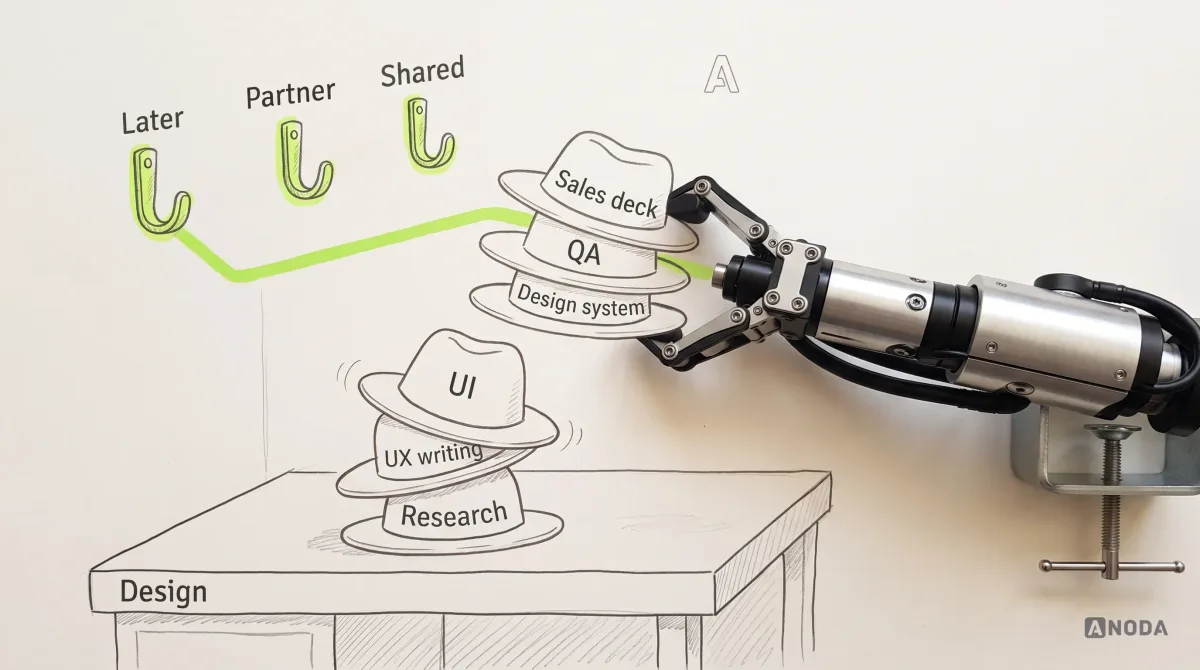
The chart hides three more risks. No critique, so nothing is challenged before engineering builds it. A bus factor of one: when that person leaves, the product’s design memory leaves too. And a political queue, where the most visible request beats the most valuable one.

The board exposes the missing decision: which request protects the important user task? An activation flow and an invoice error deserve a business priority, rather than a place determined by who sent the latest message.
Before deciding whether to add a designer, establish what the current designer owns and whether workload exceeds available capacity. Prioritize journeys against the product’s current risk and goals; onboarding, paid actions, safety, reliability or retention may each warrant attention. Make research a shared job with the product manager. Move marketing and sales requests to a separate budget or a partner. Park everything else in writing, so the parking is a decision rather than an accident.
Audit check
List everything the designer worked on last month and mark which items touched the core product journey.
Failure evidence
The agreed product work exceeds available capacity, relevant decisions lack user evidence, or important design decisions have no review support. Time allocation and study frequency need to be interpreted against the role and current questions.
Correction pattern
Write down what the designer owns, what is shared, what goes to a partner and what is parked, and defend that list in planning.
Roles a UX team needs, and which can stay shared
A useful UX design team structure starts from the jobs, not the job titles. Assess which responsibilities apply to the product and who has the skills and capacity to cover them. A named owner can coordinate shared work; a dedicated role requires a concrete workload and capability need.
| Role | Owns | Worth a dedicated person when | Until then |
|---|---|---|---|
| Product designer | Flows, interaction, interface and the states nobody remembers, for one product area | Interaction and interface decisions require sustained dedicated capacity | Assign the work to someone with suitable skills and review support; a senior generalist is one option |
| Design lead or manager | Quality bar, critique, hiring, growth, the agreement with product leadership | Leadership, mentoring or review work exceeds current coverage | Assign a capable reviewer or lead with explicit capacity |
| UX researcher | Study design, research quality, the evidence repository | Decisions regularly wait for evidence, or several squads need research | Designers and PMs run research together, with coaching |
| Content designer | Words in the interface: labels, errors, empty states, notifications | The product has complex flows, regulated wording or many languages | Assign a content owner and suitable specialist review, supported by a voice guide |
| Design system owner | Components, patterns, documentation and their governance, with engineering | Shared component governance requires sustained dedicated capacity | Agree design and engineering ownership and review whether variants are justified |
| DesignOps | Tools, workflow, handoff, research logistics, onboarding of new designers | Coordination eats noticeable designer time every week | The design lead holds it, or a partner sets it up |
Two titles you will not see as separate rows: “UX designer” and “UI designer”. In a small team, splitting the flow from the pixels creates a handoff inside design, on top of the one to engineering. Separate roles when the required skills and workload justify it, with shared goals and review of the complete experience.
The role table above is a starting point for allocating responsibilities. DesignOps work still needs an owner in an early team; a dedicated DesignOps hire is a separate capacity decision.
Who owns research, content, the design system and DesignOps
Check ownership of these four responsibilities explicitly. Shared participation still needs a named accountable owner and enough capacity to carry out the work.
Research: the radar, not a report
Designers without access to users are air traffic controllers with the radar switched off. They can still direct planes, from memory and optimism, and it goes fine right up until it doesn’t. Research is not a document delivered at the end of a phase. It is the input that tells the team which decision to make next.
In a small team, product managers and designers run research together, and someone senior checks the method. As the team grows, a research lead owns the quality of studies, the recruiting pipeline and a repository people actually search. Protect research time around the decisions the team is making. If it waits for a quiet sprint, it will never happen.
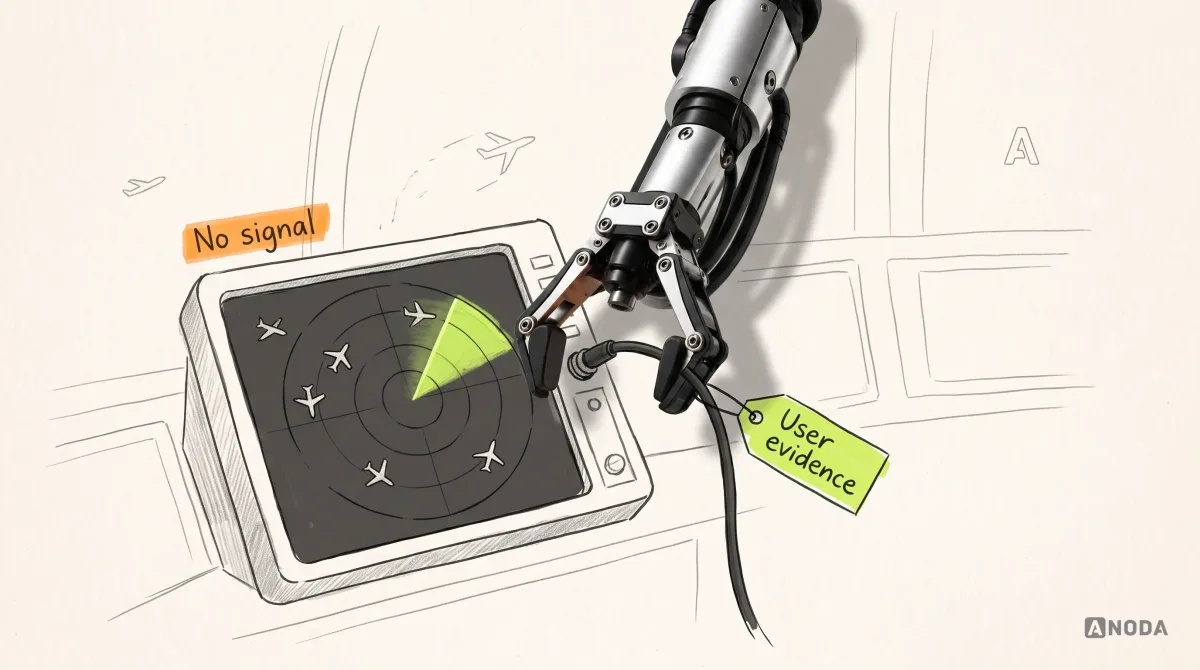
If your structure gives designers no reliable route to user evidence, that is the first gap to close, before any new hire. We help teams set up UX research that fits the decisions they actually make, from a light interview cadence to a full practice.
Content design: the interface is mostly words
Labels, errors, empty states and notifications help users understand what happened and what they can do next. Assign content responsibility and review actual wording before implementation. A designer may coordinate that work with a voice guide; complex or regulated flows can require content expertise and review by the relevant specialists.
Design system: shared furniture needs a named owner
Without an owner, a design system becomes a library of fifty buttons, each added by someone who could not find the right one. Ownership sits with a small group across design and engineering, not with design alone, because a component that exists only in the design file is just a picture of a component. When consistency has become a bottleneck and squads are rebuilding each other’s work, it is time for a proper design system with clear governance.
DesignOps: the plumbing behind the craft
DesignOps covers the unglamorous machinery: tools and licences, file structure, handoff, research logistics, onboarding new designers, and the rituals that keep all of it moving. Assign an owner for this work regardless of team size. Decide whether a dedicated role is justified by the coordination workload, required skills, current coverage and available capacity; protect senior design time from becoming a day spent chasing access and file versions.
Team shapes by product stage
There is no universal staffing ratio, and anyone who sells you one is selling a spreadsheet. What changes by stage is which jobs are urgent, which can wait and which need an outside hand. These examples are recommendations to adapt, not benchmarks.
Early product, still finding fit. One senior product designer embedded with the founders or the first product team. Research is planned together with relevant participants at a cadence that fits the decisions being made. The design system is a small component library in code, not a documentation site. An external review or audit covers what one person cannot see about their own work.
Growing product, several squads. A designer in each squad that owns a core journey. The most senior designer runs weekly critique and holds the quality bar. Research gets a part-time lead who coaches the rest. One designer and one engineer own the component library. Critical cross-squad journeys get a named accountable owner; choose priorities against task impact and risk.
Scaling product, several products or platforms. A matrix with a design leadership layer, dedicated research with research operations, a design system team, content design and DesignOps. Squads keep their designers for long enough to see outcomes, and the structure itself is reviewed whenever the product organization changes shape.
The expensive mistake is hiring for the stage you hope to reach. It is buying a twelve-seat dining table for a studio flat: you have the furniture of a big family and nowhere to walk. A design system team at seed stage, or a research department before anyone has made a product decision, spends salaries on infrastructure for a product that may still pivot. Understaffing can also leave consequential work uncovered. Assess actual workload, review support and observed rework before deciding whether the current capacity or staffing model needs to change.
Decision rights: who breaks the tie
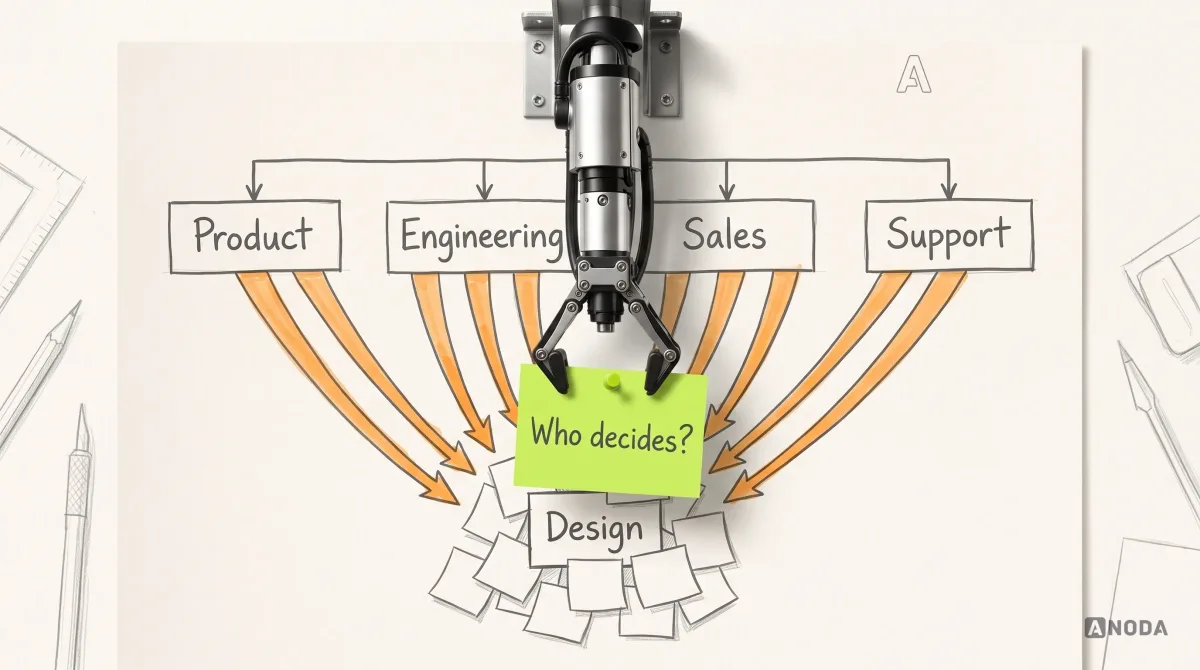
Decision rights are one part of a team-structure review, alongside skills, capacity and access to evidence. Product wants the feature this quarter, design wants the flow fixed first, engineering says the fix needs a rewrite. Agree who is accountable for each decision and how competing constraints will be resolved.
A rowing eight without a cox has eight strong people pulling hard, and the boat goes in circles. The cox does not row. They steer, set the rhythm and call the change of pace. A product team needs the same thing: not a louder voice, a named one.
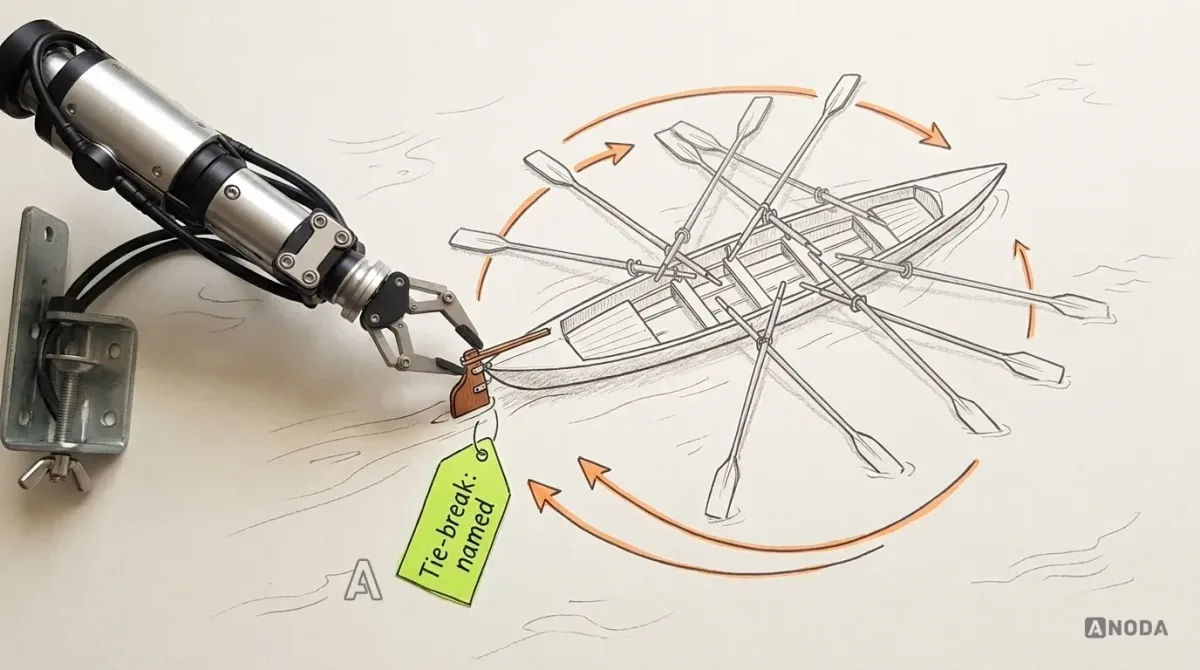
Write down who decides which kind of question. Use the following questions to agree responsibilities for your product, and we go deeper into the boundary in our guide to the difference between a product manager and a product designer.
| Decision to clarify | What to agree |
|---|---|
| Product priorities | Accountable owner, evidence and competing constraints |
| Flow and interface behavior | Design owner, user evidence and engineering review |
| Technical implementation | Engineering owner and cross-functional dependencies |
| Release quality | Observable criteria and any required specialist review |
| Known UX debt | Release authority, affected users, mitigation and review date |
| Research priorities | Decision being informed, study owner and access to participants |
An escalation agreement does not waive required safety, accessibility, privacy or regulatory checks. Resolve a conflict against the applicable criteria and evidence, rather than treating the tie-break role as permission to override them.
Make the decision to ship with known UX debt explicit. Sometimes it is the right call. It becomes the wrong one when it is made silently, every sprint, with no record. Log it, date it, name who accepted it, and put it back on the table at the next planning session. Record the affected task, severity, responsible person, mitigation and review date so the team can reassess it. Debt you only collect keeps charging interest in support tickets and rework.
Critique and the quality bar
Critique is how a UX team gets better without waiting for users to complain. A design review with twelve attendees and no named decider is a group holiday where nobody booked the hotel: everyone had opinions, nobody had the job.
Good critique has a few fixed rules:
- The presenter states the goal, the user and the constraints before showing anything.
- Feedback is measured against that goal, not against personal taste.
- Critique is for improving the work; approval is a separate decision, made by the person named in your decision table.
- Stakeholders give input at set points, not in every channel whenever they spot a screenshot.
The quality bar needs to be written down too: what “done” means for accessibility, states, content and consistency with the system. Without it, quality is whatever the most senior person in the room feels that day. We cover how to run useful sessions in our guide to giving design feedback that improves the work.
The money is in the timing. A flaw caught in critique costs a conversation. After implementation, the same flaw can require design, engineering and QA rework. When users find it first, you pay again in support, lost confidence and customers who leave.
Management cadence that keeps design connected
The chart has to survive Monday morning. Reporting lines mean little when critique, engineering review and journey ownership disappear as soon as delivery gets busy.
Agree a cadence that fits existing work: critique while decisions are still open, engineering review before implementation, build review before release, and a regular review of research findings, shared components and UX debt. Revisit reporting and decision rights when the product organization changes.
Three parts of the rhythm do most of the work. Design reviews before build catch the impossible and the expensive while they are cheap to change. Build reviews compare implemented behavior with agreed designs and acceptance criteria. And a quarterly structure check asks the uncomfortable question: do the reporting lines still match the product, or did the product move and the chart stay put?
Collaboration boundaries belong here too. Designers join discovery before a feature is scoped, not after. Engineers see work in progress before handoff, not at it. Product managers bring outcomes, not screen lists. This is the same rhythm we describe in our guide to an agile design process that keeps design and engineering in step.
DesignOps
Good designers, slow delivery, and nobody sure why?
We map how design work actually moves through your team, then set clear ownership, review practices and handoffs your squads can keep using after we leave.
Signals the structure is failing
Structures rarely collapse on a Tuesday. The barometer drops for months first, and teams keep planning a picnic. These are the readings we check before anyone redraws a box.
| Signal to investigate | Possible explanation | First check or response |
|---|---|---|
| Designers first hear about a consequential feature at sprint planning | Relevant design input may be missing during scoping | Check which decisions were made earlier and when design input was needed |
| Several versions of a component exist | Different requirements, unmanaged variants or duplicated work | Compare use cases before consolidating; agree design and engineering ownership |
| Research reports are not cited in decisions | Findings may be irrelevant, inaccessible, outdated or insufficient | Trace a pending decision to the evidence it needs and review the research gap |
| PMs request only screens | The request may omit the task or constraints, or may concern already agreed work | Confirm the intended task, prior decisions and acceptance criteria |
| Engineers fill in error and empty states | Scope or review may omit states, or the team may have agreed engineering ownership | Check coverage and implemented behavior against the quality bar |
| Every disagreement escalates to the CEO | Authority may be unclear, or the decisions may require that level of accountability | Review the actual decision types and agree appropriate escalation |
| Designers report missing growth or critique | Craft support may be insufficient | Review their feedback and support options before changing staffing |
| Design time follows stakeholder pressure | Priorities or an urgent dependency may be driving allocation | Check task impact, urgency, dependencies and the agreed allocation process |
You are already paying for these gaps. Rework consumes engineering time, inconsistent patterns fill the support queue, and neglected journeys lose the users you paid to acquire. ANODA traces the journey and the decision behind it so the next hire solves the actual problem.
Add capacity where work needs it. Settle the decision rights first, or every new designer becomes one more opinion in the same unresolved argument.
Hiring and scaling without breaking the model
More designers cannot supply the strategy or authority your team has never agreed. Before the next hire, check that the team knows what it is deciding, on what evidence, and who has the final word. If it does not, clarify those gaps while assessing whether additional skills or capacity are also needed.
When hiring does make sense, the order matters. These are recommendations, and the right order depends on your product:
- A senior generalist first. A product designer who can run research, design flows and hold a quality bar alone. A junior working alone needs appropriate mentoring, review and escalation support; assess those conditions rather than treating seniority as a guarantee.
- Capacity for consequential journeys. Allocate design capacity by task criticality and evidence; permissions, settings or recovery may outrank acquisition work in some products.
- A lead before the team outgrows informal critique. Once designers cannot all review each other’s work in one session, someone has to own the craft.
- Specialists when the required work needs dedicated skills or capacity. Assess workload, risk, coverage and expected cost before selecting a dedicated hire, shared role or external support. The roles table gives questions to consider, not salary thresholds.
Scaling also means changing the model itself. Centralized teams move people into squads once the queue becomes the main delay. Embedded teams can strengthen shared critique and journey ownership when inconsistency or isolation appears; a reporting change is a separate decision. Matrix teams need smaller spans once the design manager becomes a calendar rather than a leader. Pilot an explicit working agreement in one product area; changes to reporting lines, staffing or performance reviews need agreement from the responsible leaders.
When an outside team makes sense
Outside capacity is a legitimate fix when there is a clear gap: a critical journey with no designer, a design system nobody has time to build, a team that needs an independent view of its own work, or a workflow that grew by accident.
An external team does the most good when it plugs into your structure instead of running beside it. That means working in your squads, in your rituals, against your decision table, and leaving the systems and habits behind when it goes. If you are looking for senior product-design support that works inside your product team, look for that behaviour before the portfolio. You can see how we work with internal product teams for what that looks like in practice.
It does not help in one situation, and it is worth saying plainly: if nobody inside the company can make product decisions, an agency adds one more opinion to the pile. Fix the decision rights first. Then bring in hands.
A decision checklist for your UX team structure
Before you redraw the chart, review these questions. Prioritize unanswered questions by the decisions and risks they affect.
Choose the model after checking shared journeys, available design leadership, research access and workload. A single squad can still need shared specialists; several squads do not automatically require a matrix.
A UX team is not a set of job titles. It is how your product makes decisions about the people who use it. Clarify who decides, how the team reaches users, where collaboration starts and stops, what quality means, and which evidence sets the priorities. Then choose the chart that makes those answers easy. Every quarter you leave those answers unclear, you pay for a capable team working hard in circles.

Product design
Short of a designer on the journey that pays the bills?
We join your squads as senior product designers, work inside your rituals and decision rules, and leave the flows, the system and the habits behind when we go. Bring us the team, the product and its constraints.
Written by