
In this article
- Start with the problem and a useful outcome
- Explain the business and the people using the product
- Show examples and explain your reasoning
- Define scope and constraints
- Share relevant history and evidence
- Include domain requirements and their owners
- Agree on feedback and decisions
- A compact brief checklist
- Turn a brief into a product your business needs
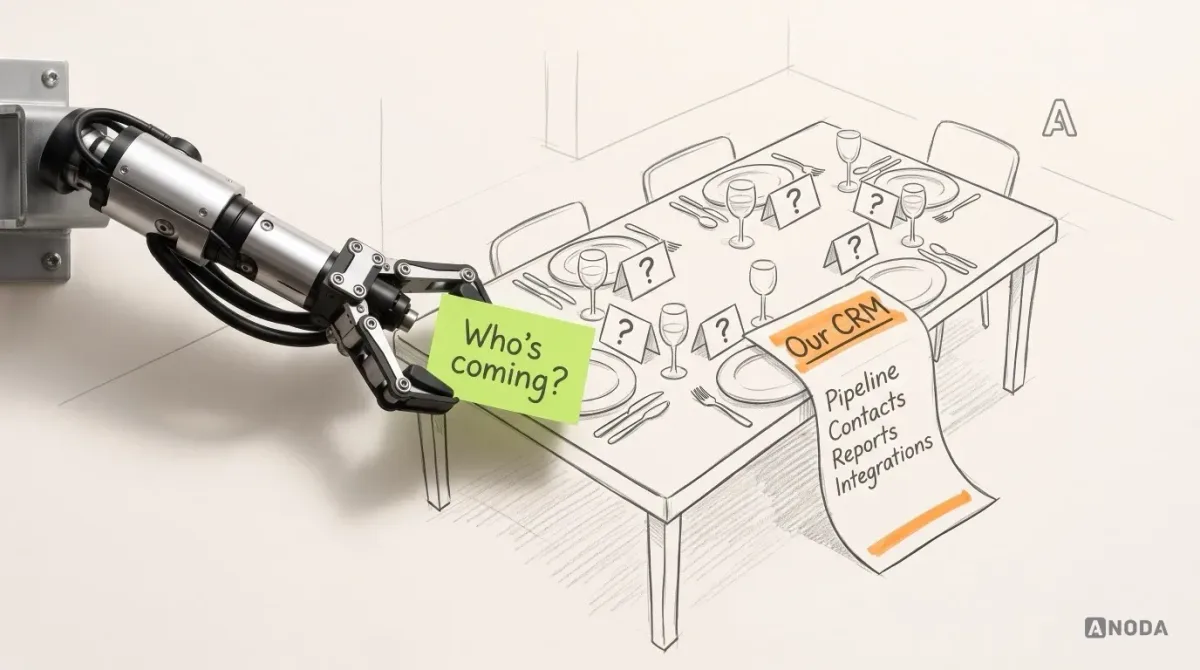
A vague brief makes you pay for the same decision twice: first in design, then in revisions. The team guesses what matters, stakeholders pull in different directions, and a product that looked simple at kickoff turns into endless improvement. A strong brief is the foundation of a product that solves your business problem. At ANODA, we use it to connect your goals, your users and the design decisions that move the work forward.
You do not need to predict every screen or feature. State what you know, mark assumptions and explain what still needs investigation. A clear brief gets the important decisions into the open before misunderstandings become expensive. Research, estimates and the project agreement carry that clarity into delivery.
“The same tasks can be solved in different ways, depending on the vision and mission of the Client’s company. The same features can look different. Therefore, it is very important for us to get the maximum amount of information before starting. We must understand that we will create a truly valuable product” — ANODA Design Team Lead.
Start with the problem and a useful outcome
Describe the product, its stage and the reason for the project. Are you exploring a new idea, improving an existing flow or redesigning a product that has grown difficult to use?
Connect the request to an observable problem. Instead of “make the dashboard modern,” explain that account managers cannot identify overdue requests without opening several records. Include the source of that observation, such as support tickets, interviews or task recordings.
Define how you will assess progress. You might want users to complete a specified task without assistance, or a prototype to answer a particular question. For a business metric, record its definition, baseline, timeframe and who can provide the data. Give the design team a business destination, so every proposed screen has a reason to exist.
Explain the business and the people using the product
Introduce your company, its business model and the product’s role. Name the buyer, daily users and other people involved in the workflow. In business software, those may be different groups with different permissions and responsibilities.
Describe what users are trying to do, what triggers the task, where they work and what interrupts them. Include devices, connectivity, language and accessibility needs when relevant. Demographic details can matter, but age alone does not determine preferences, trust or financial behaviour.
Separate established findings from your current view of the audience. Existing research helps the agency decide what can be reused and what needs validation. If research access is limited, say so and identify who can arrange participant contact. See our UX research service for the kinds of questions research can address.
Show examples and explain your reasoning
Share a few relevant references: products, interfaces, brand materials or previous work. For each, identify the part that matters and why. A reference might show useful information hierarchy, clear status feedback or a visual direction you want to explore.
Explain dislikes with the same precision. “Too busy” is less useful than “the decorative background competes with the transaction status.” References establish a direction for discussion; they are not instructions to copy another product’s assets or interaction patterns.
Define scope and constraints
List the workflows and surfaces you need help with, then distinguish the first release from later possibilities. Record what is excluded. If you need responsive web, native mobile, branding, design-system work or implementation, identify each separately so both sides can discuss responsibilities.
Add practical constraints: existing technology, integrations, available content, supported devices, markets, languages and brand guidelines. Include budget range and deadlines, with the reason behind fixed dates. Identify dependencies such as access to a working product, decisions from an engineering team or content supplied by another partner.
Future plans are useful context. A new market can affect language, content length and permissions. Tell ANODA where the business is going so we lay the right foundations now, instead of making you repeat the redesign when it grows.
Share relevant history and evidence
Describe earlier attempts, known problems and decisions that must be respected. Link to research summaries, analytics definitions, existing flows or approved requirements. Provide context for each document so the agency can distinguish current evidence from an outdated proposal.
Keep the brief focused. More material is not automatically better: highlight the evidence that changes a design decision, avoid duplicating documents and use approved channels for confidential information.
Include domain requirements and their owners
For a financial product, name the intended markets, services, data handled and responsible compliance or legal reviewer. Supply approved requirements and wording, or mark them as unresolved. Ask which flows need review and when that review can happen.
Do not reduce domain requirements to a generic set of checkboxes. The applicable requirements depend on the product and market. The brief should identify who supplies and approves them so the design team can work with the right constraints.
Agree on feedback and decisions
Name a primary contact, the people providing feedback and the person approving scope and deliverables. Explain how conflicting comments will be resolved and what turnaround time is realistic.
Agree on how changes will be discussed. A new requirement can affect effort, sequencing or deadlines; it should not disappear into an informal comment thread. The brief can capture the starting assumptions, while the project agreement defines delivery and approval arrangements.
A compact brief checklist
Before sharing the brief, check that it covers:
- The product, project stage and problem to investigate.
- The outcome you want to assess and the evidence available.
- Users, tasks, context and unanswered research questions.
- Priority workflows, surfaces and exclusions.
- Useful references and the reasoning behind them.
- Budget, timeline, technical constraints and dependencies.
- Domain requirements, approved content and review owners.
- Contacts, feedback process and decision authority.
Turn a brief into a product your business needs
You do not have to arrive with every answer. Bring the goals, the difficult parts and the product history. ANODA connects them: we challenge vague requests, uncover the real user problem and translate your business direction into a clear design scope. You get a team working toward the same outcome instead of another round of competing opinions.

UI/UX design
Stop losing time to revisions that a better brief could prevent.
Bring your product context to ANODA. We will turn it into clear priorities and a design direction your team can move forward with.
Written by